
Truth, Deception, and Justice
When You Were MineThis thread traces how lies and documents first enable Isobel’s oppression, then become contested evidence through which the family seeks accountability.
increasing Bearing strength in each event
 decreasing
Bearing strength in each eventdecreasingA Lie about Peter
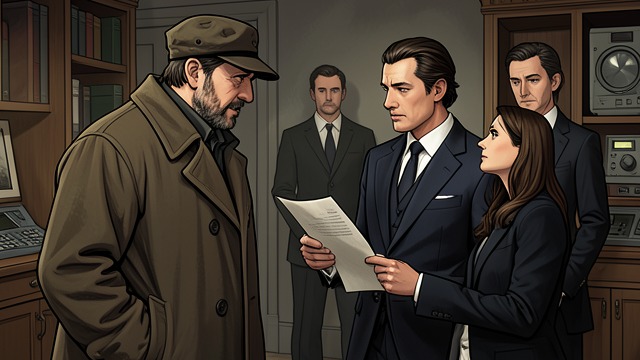
A Lie about Peter
Authority Built on Falsehood
Rupert tells Isobel that Peter has died and presents the claim as the reason he now controls her guardianship. The lie makes resistance feel futile: Isobel is grieving, isolated from reliable information, and unable to challenge the authority asserted over her.
Deception with Material Purpose
Rupert’s false account is not merely a cruel personal trick. It helps him move Isobel to Gosport Hall and gain leverage over her future, revealing how misinformation can turn a legal structure into an instrument of private gain.
The Cost of a False Death
The Cost of a False Death
A Concealment Misread
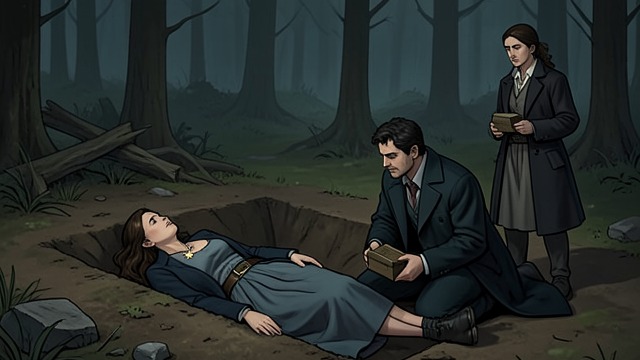
Sir Hubert Williams helps arrange a false death report so Rupert will stop searching for Isobel. When Dominic and Peter discover a woman buried with Isobel’s star necklace, they accept the apparent identification and grieve at what they believe is her grave.
Protection Turns into Pain
The scheme succeeds in concealing Isobel’s survival from her pursuers, but it also causes profound and avoidable grief for the people looking for her. The episode shows that a lie can protect a vulnerable person while imposing serious costs on others, particularly when no safe way exists to reveal the truth.
A Necklace without an Answer
A Necklace without an Answer
An Object as Evidence
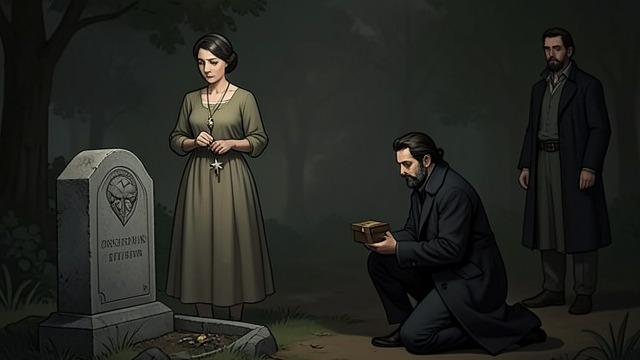
At the grave, the star necklace found on the unidentified woman appears to confirm Isobel’s death. For Dominic and Peter, its personal meaning outweighs the lack of an independently established identity, and the object becomes the emotional center of their false conclusion.
Evidence and Interpretation
The necklace is genuine, but its presence does not prove that the dead woman is Isobel. Its power lies partly in what the men know about Isobel’s attachment to it; the scene warns that even a truthful clue can mislead when the surrounding facts are incomplete.
Paperwork as Proof and Fraud
Paperwork as Proof and Fraud
Remembering the Betrothal Papers
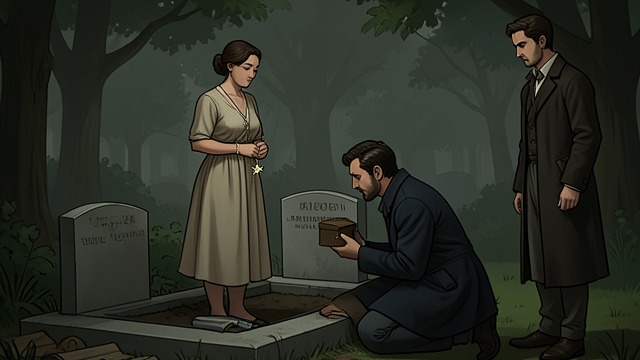
After being asked to write an account of her captivity, Isobel remembers that Rupert and DeLisle had already signed a document meant to betroth her to DeLisle. She had refused to sign it, and that refusal had exposed how essential her participation was to their plan.
The Document’s Evidentiary Value
The papers can help establish that the men intended to use Isobel’s marriage and fortune for their benefit. What had been presented to her as an impending private arrangement now becomes evidence of coercion and attempted financial wrongdoing, allowing her memory to inform the family’s effort to hold them accountable.
Evidence Against the Conspirators
Evidence Against the Conspirators
A Search for Corroboration
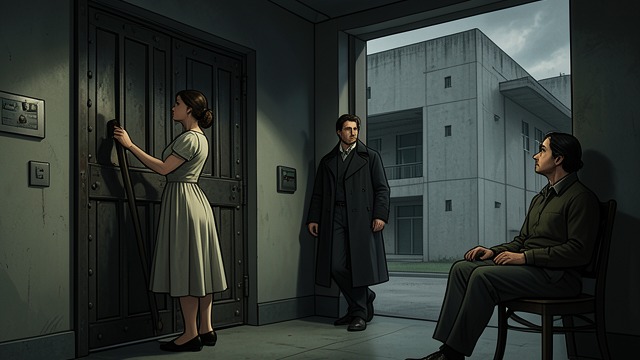
Isobel and Dominic enter Rupert’s house and recover documents that bear on the scheme against her. The papers do not stand alone: the family also gathers testimony and information about Rupert’s debts and DeLisle’s treatment of his wife.
Justice beyond Revenge
When Rupert and DeLisle confront the household, Peter and Dominic lay out the alleged crimes and the evidence they have assembled. The case against them reframes Isobel’s private suffering as conduct that can be named and judged publicly, even as the violent final confrontation complicates the possibility of orderly legal resolution.
When Rupert removes Isobel from Willowbrook Hall
During Dominic and Peter’s search for Isobel
At the village graveyard two months after Isobel’s escape
When Isobel recalls the proposed betrothal document
After Isobel and Dominic retrieve the papers
